
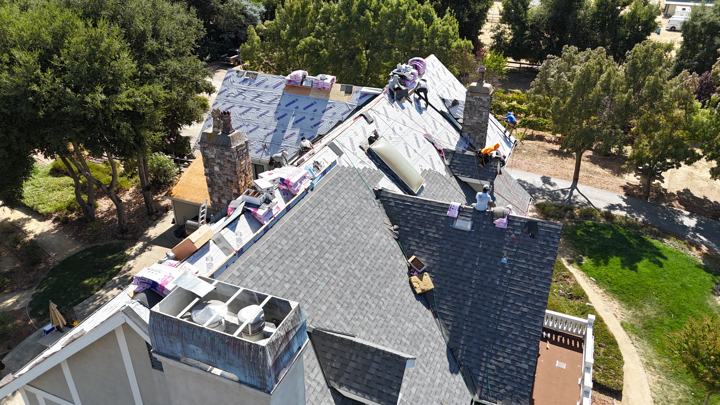
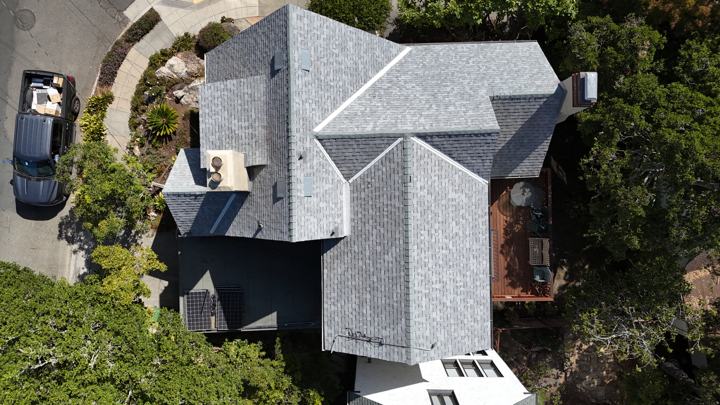
A roof under a redwood canopy in Mill Valley, Larkspur, Woodside or Orinda lives a different life than the same roof in a sunny Concord tract. It stays wet longer, collects debris constantly and grows moss on the north slope. Left alone, it can lose ten years of service life. Here is how to keep that from happening.
How debris kills a roof
Needles and leaves pile up in valleys, behind chimneys and at the gutter line. They hold water against the roofing for days after the rain stops. Underlayment and shingles that are supposed to dry out never do. Valleys clog, water backs up under the shingles, and the deck rots at exactly the places that are hardest to see from the ground.
How moss does it
Moss grows where it stays damp and shaded. Its roots lift the shingle edges, hold even more water, and in a storm the lifted shingles let wind driven rain straight through. Pressure washing moss off a roof destroys the granules and makes the problem worse.
What to do each year
- Clean valleys, gutters and the areas behind chimneys and skylights every fall, and again after the first big storm.
- Trim branches back so the roof gets sun and air.
- Treat moss with a roof safe product and let it die and wash off, do not scrape or blast it.
- Get an inspection before the rains if the roof is past fifteen years.
Materials that hold up under canopy
Algae resistant architectural shingles, synthetic underlayment that does not rot, and in heavy canopy, standing seam metal that sheds needles and gives moss nothing to grip. Fire zones in these same neighborhoods add the Class A requirement, which these materials meet.
Our approach in the hills
We clean the roof as part of every inspection, spec materials for canopy and fire exposure, and set up a yearly maintenance visit for owners who want one. It is far cheaper than a deck replacement.
More from the blog
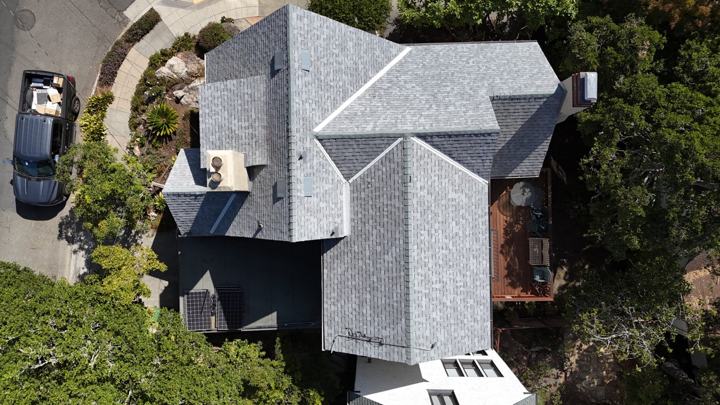
Buying a Bay Area Home? Get the Roof Inspected Separately
General home inspectors look at a roof from a ladder, if at all. Why a dedicated roof inspection with a drone report protects buyers, what it finds, and how to use it in negotiations.
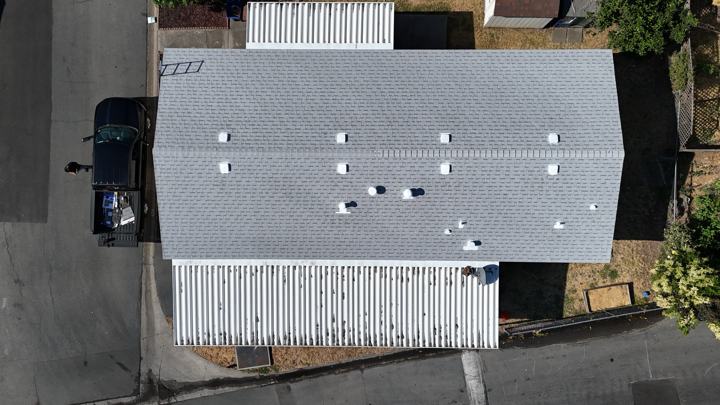
Title 24 Cool Roof Rules: What Bay Area Reroofs Must Follow
California Title 24 energy code sets cool roof requirements that apply to many Bay Area reroofs. Which climate zones, which roofs, which materials qualify and how a contractor handles compliance.
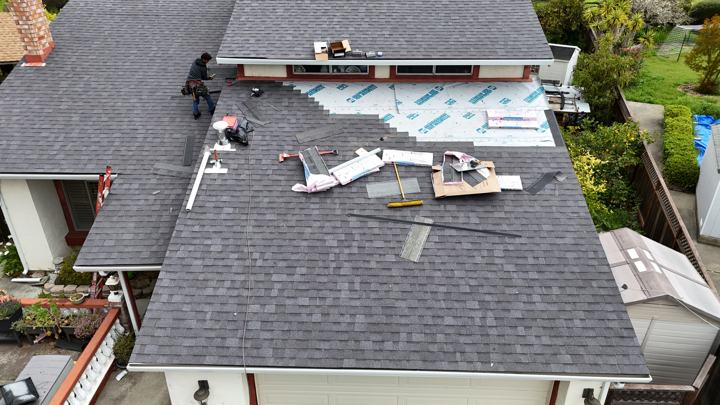
How to Choose a Roofing Contractor in the Bay Area
The questions that separate a real roofing contractor from a sales office: license verification, insurance, who actually shows up, what the warranty covers and why the photo report matters.
Request a free roofing quote
Tell us what is going on with your roof and we take it from there. Free inspection, a drone photo report and a written number, usually within a day.
Prefer to pick a day and time? Book online
Get your free roof inspection
Drone photo report included. A few quick questions, about 30 seconds.