
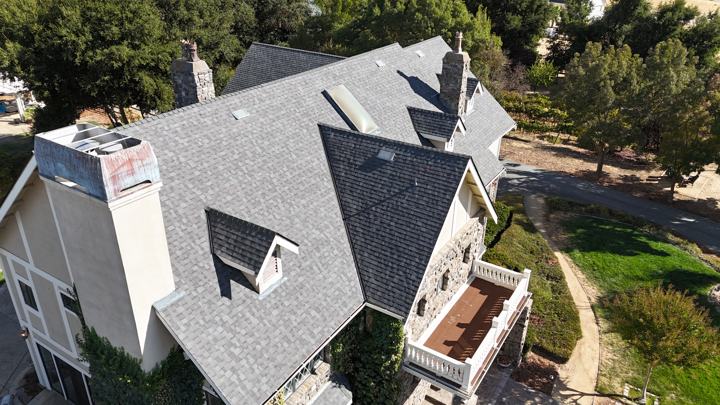
It is the first question every homeowner asks and the one most roofing websites refuse to answer. The honest answer is that it depends on your specific roof, but "it depends" is useless on its own. Here is what actually moves the number in the Bay Area, so you can read any estimate you receive and know whether it is fair.
The six things that drive the price
- Size and pitch. Roofing is priced by the square, which is 100 square feet of roof surface. Steeper roofs take longer, need more safety setup and waste more material on cuts. A 2,000 square foot ranch in Concord has a very different roof area than a 2,000 square foot two story in Danville.
- Material. Architectural asphalt shingles are the value leader. Concrete tile costs more, clay tile more again, standing seam metal and slate sit at the top. Flat roof systems like TPO and torch down are priced on their own scale.
- Tear off layers. Some older Bay Area homes carry two or even three layers of old roofing. Every extra layer adds labor and dump fees, and California only permits one overlay anyway.
- Wood repair. Nobody knows what the plywood looks like until the old roof comes off. A good contractor prices deck replacement per sheet in the proposal so surprises are priced before they happen, not invented afterward.
- Details and access. Chimneys, skylights, valleys, solar panels that need to be removed and reinstalled, hillside lots in Orinda or Mill Valley and tight San Francisco rowhouse access all add hours.
- Permits and code. Every Bay Area city requires a reroof permit, and California Title 24 cool roof rules apply to many projects in the warmer inland climate zones. The permit, the inspections and the compliant materials are part of a real quote.
Why the cheapest bid is usually the most expensive roof
Low bids save money in the places you cannot see from the driveway: thinner underlayment, reused flashing, skipped starter strips, no ridge ventilation, no permit. Those shortcuts surface as leaks in year three instead of year twenty five. When two bids are far apart, ask each contractor to list exactly what is included, then compare them line by line. The difference is almost always underneath the shingles.
What a real quote includes
Tear off and disposal, deck inspection with a per sheet wood price, synthetic underlayment, ice and water barrier at valleys and eaves, new flashing and drip edge, the roofing material by name and line, ridge and attic ventilation, permit and inspections, cleanup with a magnetic nail sweep, and both the manufacturer warranty and the workmanship warranty in writing. If any of those are missing from a proposal, ask why.
How to get a real number for your roof
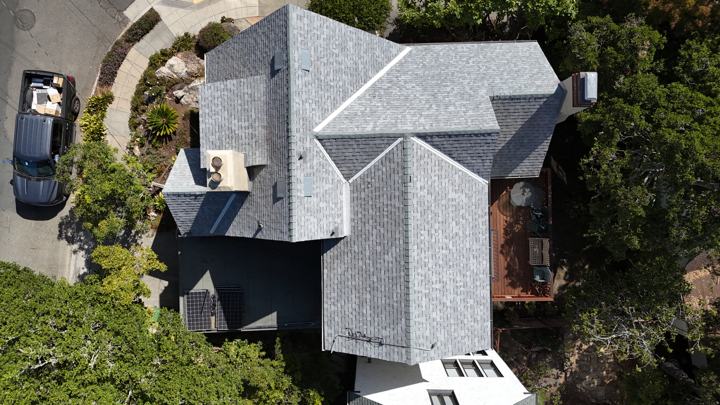
Any price you get without someone standing on your roof is a guess. We inspect, measure, photograph and fly the drone first, then give you a written estimate with wood repair priced in advance. The inspection and the estimate are free, so you lose nothing by getting a real number for your exact home.
More from the blog
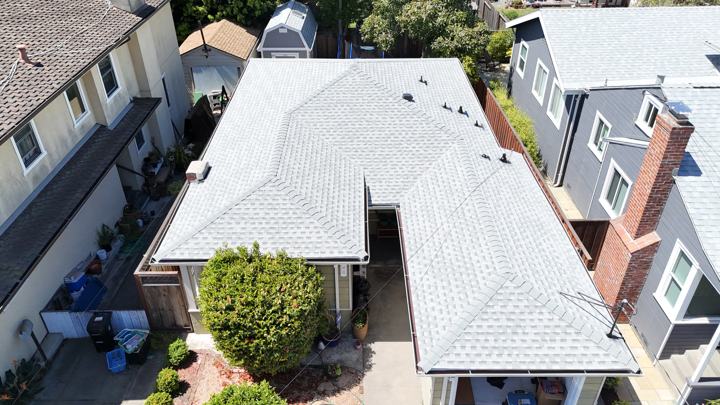
How Long Does a Roof Last in the Bay Area?
Real service lifespans for shingle, tile, flat and metal roofs across Bay Area microclimates, from foggy Daly City to hundred degree Livermore, and what decides whether you get 15 years or 30.
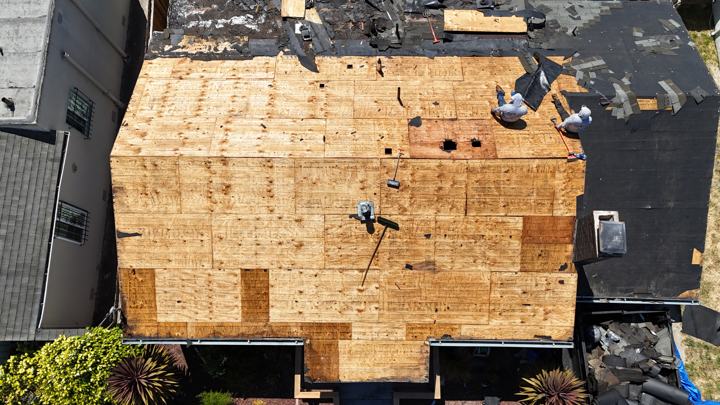
Roofing an Eichler: A Guide for Bay Area Flat Roof Owners
Eichler homes in Walnut Creek, Palo Alto, Sunnyvale, San Rafael and Concord have low slope roofs with specific insulation, drainage and material needs. What works, what fails and what to ask a roofer.
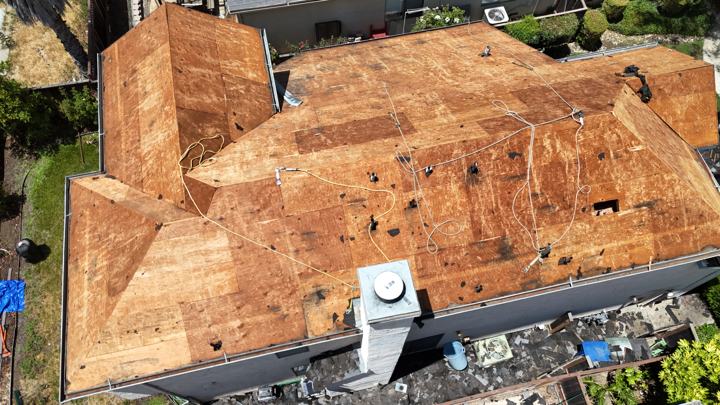
Why Your Attic Is Quietly Destroying Your Roof
Dead attic ventilation and thin insulation age shingles from below, rot decks from condensation and drive summer cooling bills. What a Bay Area attic should have, and why we fix it during a reroof.
Request a free roofing quote
Tell us what is going on with your roof and we take it from there. Free inspection, a drone photo report and a written number, usually within a day.
Prefer to pick a day and time? Book online
Get your free roof inspection
Drone photo report included. A few quick questions, about 30 seconds.